
The leaves are changing colors, t-shirts are making way for hoodies, and pumpkin spice lattes are the top-selling drink at Starbucks, which can only mean one thing – it’s election season in DC.
While the District won’t be the site of a hotly-contested chief executive’s race or a majority-defining Senate seat up for grabs, Washington’s elections do have a unique feature.
The Advisory Neighborhood Commission system, which began operating in 1976, after approval of DC’s Home Rule Charter, is a hyperlocal board of elected officials, designed to serve as a bridge between residents and government agencies.
Francis Campbell, a former 12-year commissioner for single-member district 6B10, believes the system is an effective way to get answers for residents who are attempting to deal with some of the District’s agencies.
“I think that’s the one thing that the commissioners have over the council members for some of the constituent services, is that we have a better grasp on what the issues are in the neighborhood and what, you know, impacts our residents,” he said.
This year, because of redistricting, there are 345 seats up for grabs across 46 different ANCs. Each seat represents a single-member district, which includes an average of 2,000 residents.
The small size of each single-member district and the sheer number of commissioners mean that the power of the office is relatively limited, but in other ways, it’s advantageous to building tight-knit relationships with constituents.
Amanda Farnan, the current ANC 1B11 commissioner, sees the size as an opportunity to get involved at a personal level.

“If you are an interested and engaged commissioner, you can really meet every member of your community,” she said. “You can field daily requests from people who have very different needs, from transportation safety on V Street to campus life safety on W Street.”
Unlike other DC elections, the ANC races are nonpartisan and there is no primary race. The barrier to entry is small, with minimal requirements other than residing within the single-member district you want to represent for at least 60 continuous days and holding no other public office. ANC candidates only need to present 25 signatures to appear on the ballot. Once-elected, commissioners serve two-year terms.
Additionally, most ANC elections are relatively low-turnout affairs, amplified by the small size of the single-member districts. Voter participation in ANC elections is typically much lower than top of ticket races or even votes on ballot initiatives. In 2020, across Ward 1, just over 71% of voters who cast a ballot in the presidential race also cast a vote in their respective ANC races, while 84% of presidential election voters also voted on Initiative 81, a ballot measure to decriminalize magic mushrooms.
ANC races are often uncontested as well. In the 2020 election cycle, just over a third (36%) of ANC races included more than one candidate. Another 8% of races featured no declared candidate and only write-in votes were tabulated.
Shane Seger, a candidate for ANC in single-member district 7D09, lamented the fact that so few races are competitive.
“I think it’s a shame that so many advisory neighborhood commission races are uncontested,” he said. “Ultimately it [contested elections] makes better candidates and ultimately it makes better commissioners.”
Ms. Farnan was appointed to her seat after running unopposed in a special election last year, but is facing a challenger this year. She says her approach is unchanged.
“I think I’m taking a similar approach as if I were either running against someone who has similar ideologies as me, different ideologies to me. I’m just focusing on first, doing the work as commissioner, as I still represent the area, but second, communicating my record in a very clear way for folks to understand.”
Commissioners have no formal authority or voting powers in the DC Council, but they can advocate for their constituents to government agencies and councilmembers.
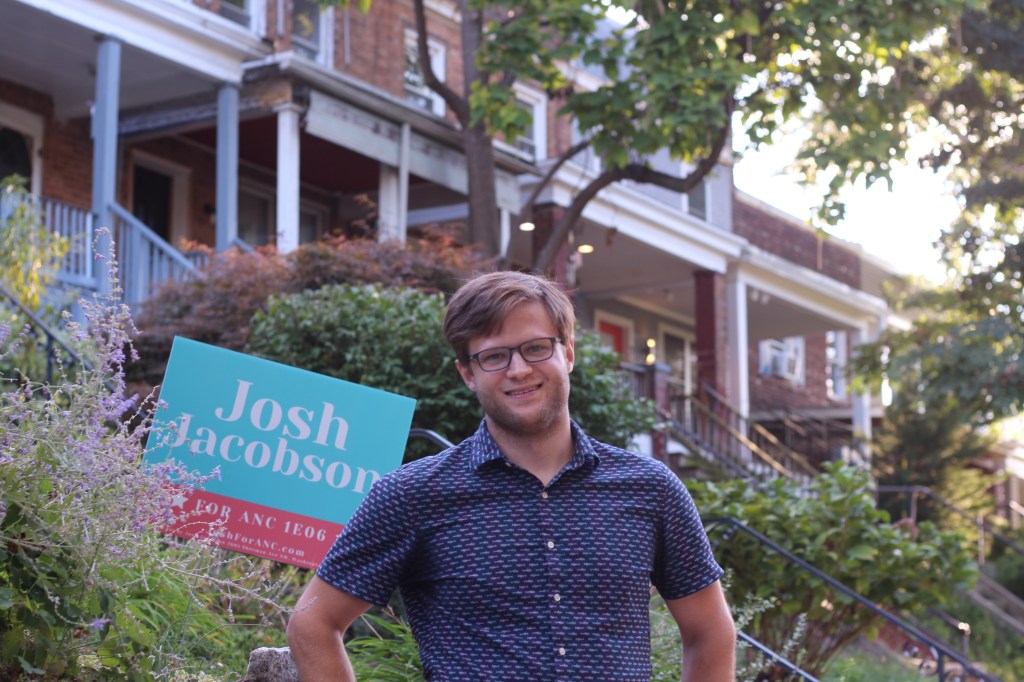
Josh Jacobson, who is running for a seat in ANC 1E06, spoke on the community work he was already doing and planning to continue if elected.
“It was just like a lot of me pestering them [DC Department of Transportation] and eventually having to tag the councilmember, having to tag the MOCRS [Mayor’s Office of Community Relations and Services] on Twitter and just be like, DDOT isn’t doing their job,” Jacobson said.
While the ANC position may seem like a perfect set-up for ambitious politicians looking to get involved in DC politics, Mr. Campbell cautioned against it, calling it a “crappy reason to run.”
“I think they go at it for the wrong reasons, because they’re using it as a stepping stone. I’m not defending that. I think it’s a crappy reason to run for commissioner. I think there are a great deal of people, though, who are running for it to make a difference.
Many candidates running for ANC bring some kind of experience in local politics, whether in Washington or elsewhere.
Mr. Seger has prior experience working as an alderperson in Ithaca, New York, and Ms. Farnan has been involved with her local ANC since 2017. Mr. Jacobson frequently tweets at District officials with pictures of cracked sidewalks and broken walk buttons.
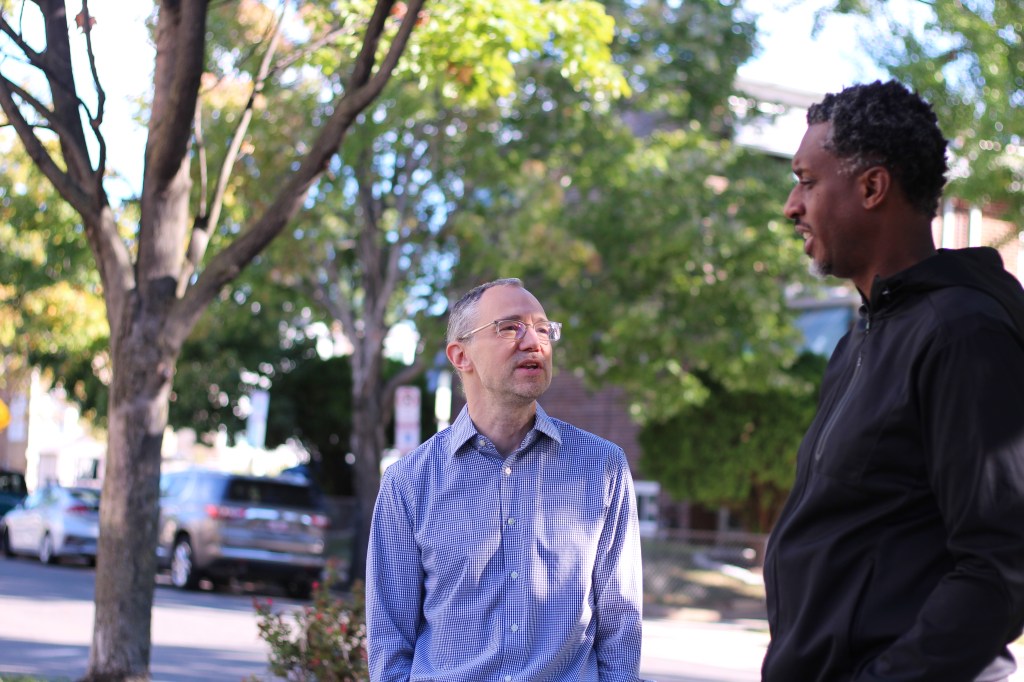
The role is a unique blend of education and advocacy, where candidates are simultaneously reminding voters that their position exists, while serving as a voice on behalf of those same residents for myriad issues.
“I think it’s two-way information sharing,” Mr. Seger said.
Mr. Campbell, who has remained active in the Hill East neighborhood following his tenure as commissioner, stressed the importance of candidates having the right mindset and the ability to dedicate their full, undivided attention to the position.
“I told candidates in the past I wouldn’t support them simply because I didn’t think they would have the time to devote to these issues,” he said.
And the time commitment is intense. Campbell described it as a “40-hour job.” Commissioners are unpaid and receive limited support from the DC government, something candidates brought up as needing to change.
Mr. Seger was hopeful that proposed legislation to reorganize the ANC office would be helpful.
“I know that there is a proposal to appoint a new permanent director of the office of advisory neighborhood commissions…having somebody whose job would be to focus on how to support ANCs would be a major improvement.”
Ms. Farnan pointed to a bill introduced by Councilwoman Christina Henderson that would pay commissioners a stipend for the position, which is currently unpaid.
“I think that could open the door to a more diverse pool of candidates,” she said. Right now you only have people who are running and serving as commissioners who have the time and capacity to do this as a volunteer role.
Mr. Campbell felt even more needed to be done. During his tenure, he was elected chair of his ANC’s planning and zoning committee and needed to learn much of the District’s building code on his own, and what offices to contact, without support from the city.
“Honestly they can’t pay you enough…Unless you’re telling me you’re going to pay 60,000 a year, I don’t see where that $100 a month is going to be applicable or appropriate for whatever the amount of work we have to do,” Campbell said.
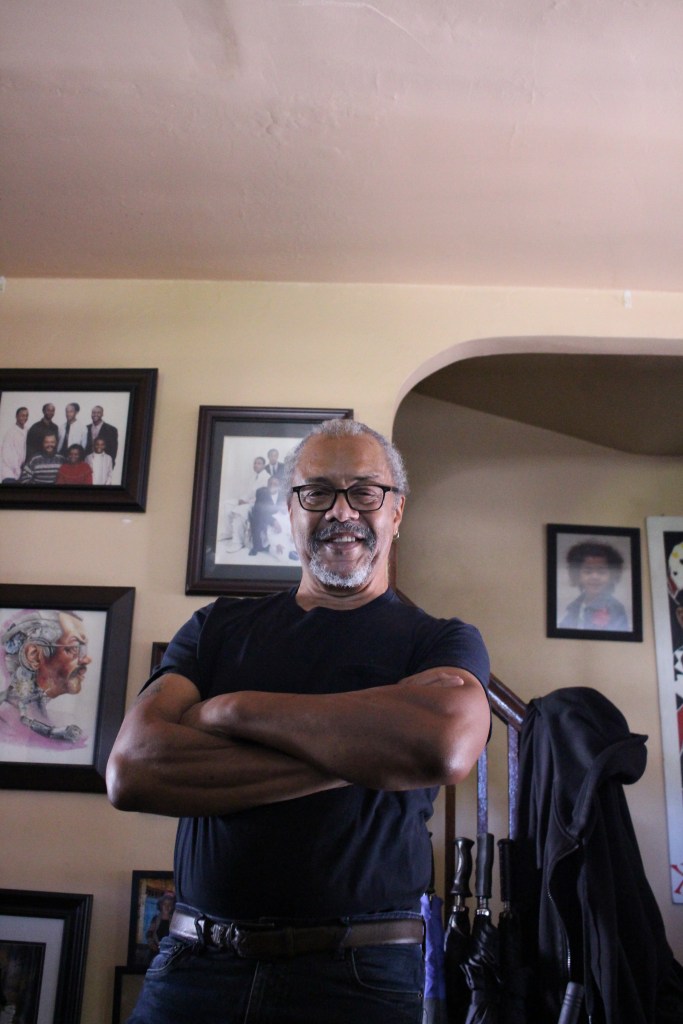
Despite the job’s plethora of challenges and difficulties, Mr. Campbell said the satisfaction of a job well done was reward enough.
“What makes it worth it? For me, it was getting the issue addressed…Even simply a matter of getting someone a new trash can because theirs was busted and the city will always charge for a new one,” he said.
ANC elections don’t just have implications for long-term residents and homeowners, either. Ms. Farnan currently represents and Mr. Jacobson is seeking to represent districts that include Howard University property, like the Howard University Hospital and Howard Plaza Towers. If elected, both will be important voices in any potential up-zoning or rebuilding the university is planning to push forward within the next two years.
Howard students who are looking to directly have an input on their local ANC’s decisions can get involved as well.
Single-member district 1E05 is currently without a candidate for the seat, and includes Drew and Cook Halls, Harriet Tubman Quad, and a wide swath of the campus that runs from Burr down through the Yard and ends near the CB Powell building. Interested candidates should contact the DC Board of Elections at (202) 727-2525, or the Office of Advisory Neighborhood Commissions at (202) 727- 9945.
This story was written to fulfill a writing requirement for Multimedia Storytelling.
 Julius Washington Reports
Leave a comment